There is a certain kind of move that starts with more than wanting a different house.
Maybe you want more room for your family. A real shop instead of squeezing equipment into the garage. Trails close enough to ride after work. Mountains your kids grow up seeing every day. A community where life feels a little more intentional without asking you to become less ambitious.
And if you work in a skilled trade, there is another question underneath all of that:
Could I build a good career or business here, too?
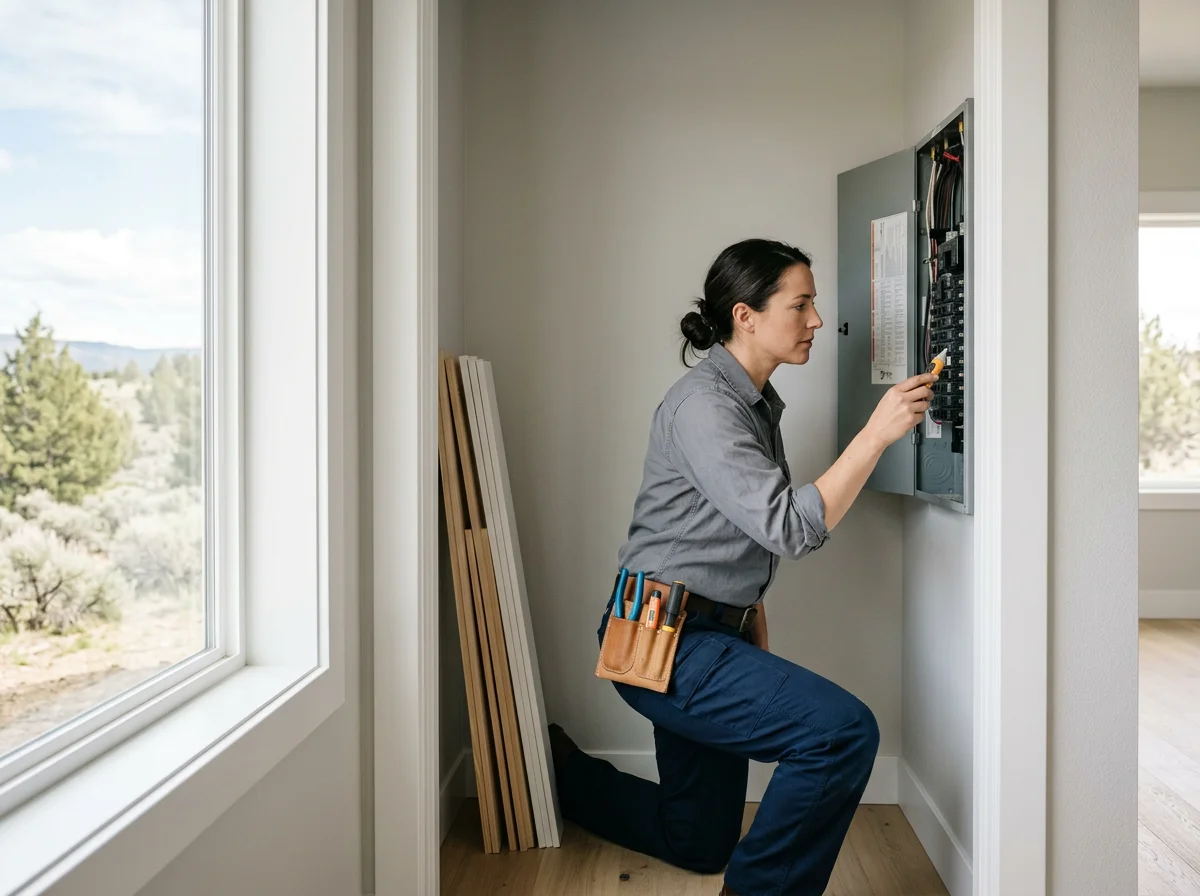
For plumbers, electricians, HVAC professionals, carpenters, remodelers, contractors, construction managers, and other skilled trades professionals, relocating to Central Oregon is not simply a housing decision. It can mean evaluating an entirely new market. Will your license transfer? Are employers hiring? Is there enough demand for what you do? What will housing cost? Can you find a property with the garage, parking, acreage, shop space, or access you need? Could you eventually hire employees? How far would you drive between customers?
And just as importantly: Would your family actually enjoy building a life here?
Those are the questions worth answering before making the leap. Central Oregon offers some genuinely interesting possibilities. It also comes with real costs, regulations, and tradeoffs. This guide is not meant to convince you that moving here is automatically the right decision. It is designed to help you figure out whether the opportunity makes sense for you.

Central Oregon at a glance
| 107,342 | 7,362 | 1,094 |
|---|---|---|
| Bend population estimate, July 1, 2025 (U.S. Census Bureau) | Construction and extraction openings projected in Central Oregon, 2023–2033 (Oregon Employment Department) | Of those openings projected from employment growth |
These are regional indicators, not a guarantee of demand or individual business success.
Central Oregon is growing. What does that actually mean for skilled trades?
Central Oregon has continued to grow faster than much of the state. The U.S. Census Bureau estimated Bend's population at more than 107,000 in 2025, with continued growth since 2020. Local governments are simultaneously planning for future housing, infrastructure, transportation, and employment needs.
Growth matters to the skilled trades because new residents create demand for far more than new houses. They create homes that need to be built and maintained. Older homes get remodeled. Electrical systems get upgraded. Furnaces and heat pumps get replaced. Water heaters fail. Bathrooms get renovated. Garages become living space. Businesses need tenant improvements. Properties need maintenance. And new neighborhoods require infrastructure.
Bend's recent housing planning documents also show a significant existing housing base alongside continued residential development. That matters because skilled-trades opportunity does not depend entirely on new construction. Every existing home represents future maintenance, repair, replacement, and improvement needs.
Growth can create several kinds of demand
| BUILD | MAINTAIN | IMPROVE | ADAPT |
|---|---|---|---|
| New homes, commercial construction, additions, infrastructure | Plumbing, electrical, HVAC, property maintenance, recurring service | Remodeling, efficiency upgrades, aging-in-place projects, additions | ADUs, garage conversions, changing household needs, property improvements |
Oregon Employment Department projections reinforce the broader opportunity. Its 2023–2033 outlook projected thousands of construction and extraction openings in Central Oregon, including openings for electricians, carpenters, plumbers, construction supervisors, equipment operators, and related occupations. Many of those openings are expected to come from workers leaving occupations as well as new job growth.
That distinction matters. Growth can create favorable conditions for skilled trades. It does not guarantee that every trade, employer, or business model will succeed. The opportunity is worth investigating, not assuming.
Where might skilled trades find opportunity?
“Skilled trades” describes a huge collection of professions. An electrician is evaluating a different market than a carpenter. An HVAC company may build recurring service relationships that look very different from a general contractor's project pipeline. A plumbing business may encounter licensing hurdles that don't apply to a remodeler.
So the useful question isn't simply, “Are skilled trades needed in Central Oregon?” It's: Where does my particular skill fit into the way Central Oregon is building, maintaining, and improving property?
New construction
Residential and commercial development can create work for:
- Plumbers
- Electricians
- HVAC professionals
- Carpenters and framers
- General contractors
- Construction managers
- Excavation and site contractors
- Finish trades
- Specialty subcontractors
For someone accustomed to working with builders or developers, understanding the local builder ecosystem may be just as important as understanding individual homeowners.
Remodeling and renovation
Central Oregon has homes from many different eras, along with continued demand for remodeling and property improvement. That creates potential opportunity around:
- Kitchens and bathrooms
- Additions
- Electrical upgrades
- HVAC replacement
- Plumbing improvements
- Finish carpentry
- Energy-efficiency projects
- Aging-in-place modifications
- Garage or bonus-space conversions
Service and repair
This is easy to overlook when people focus on construction statistics. Homes continue needing plumbers, electricians, HVAC technicians, maintenance professionals, and repair contractors whether new construction is accelerating or slowing. For an owner-operator, service work can also create possibilities around repeat customers, maintenance programs, emergency service, and recurring revenue.
ADUs and changing housing needs
Housing policy and affordability pressures have encouraged more flexible housing throughout Oregon. Adding an accessory dwelling unit, converting existing space, or adapting a property for multiple generations can touch nearly every major trade.
Commercial, hospitality, and property management
Central Oregon's economy also includes tourism, hospitality, healthcare, recreation, commercial property, and property management. Depending on your trade, strong business relationships may eventually matter as much as individual residential customers. Possible relationships include property managers, builders, restaurants, resorts, vacation properties, commercial operators, HOAs, and facility managers.
The initial regional research identified this diversity of business models as one of the more interesting opportunities worth exploring.
You don't necessarily have to move and start a business on the same day
One assumption is worth challenging. Relocating to Central Oregon does not have to mean immediately launching or relocating an entire company. There are several possible paths.
- Work locally first: Take a position with an established company, learn Oregon's codes and processes, build relationships, and understand the local market before becoming an owner.
- Relocate an existing company: Bring your equipment, systems, capital, experience, and brand into a new market.
- Move first. Build later: Establish your family and professional network before launching something of your own.
- Expand rather than completely relocate: Depending on your existing business and geography, Central Oregon could become an additional market rather than an immediate replacement for your current one.
None of these paths is automatically better. The important point is that relocation and entrepreneurship do not have to happen in one giant leap.
Before you evaluate the market, verify your license
This may be the most important practical step in the entire process. Oregon licensing requirements vary considerably by trade. Depending on what you do, requirements may involve individual trade licensing, business licensing, Oregon Construction Contractors Board licensing, bonding, insurance, continuing education, local permits, and specialty credentials.
Electrical and plumbing contractors, for example, can have requirements through both Oregon's Construction Contractors Board and Building Codes Division. And coming from a neighboring state does not necessarily mean your credential automatically transfers.
Washington electrician vs. Washington plumber
Washington General Journeyman Electrician
Oregon currently provides a reciprocity pathway for certain qualifying credentials.Washington Journeyman Plumber
Oregon's current reciprocity agreements are with Idaho and Montana, not Washington.
Same two states. Two skilled trades. Two very different answers.
That is why asking “Does Oregon accept Washington licenses?” isn't specific enough. The better question is: “What does Oregon require for my exact credential and experience?” An experienced professional who does not qualify for reciprocity may still have another path involving documented training, experience verification, examination, or other requirements. Before making a relocation decision around your current credential, verify the current rules directly with the Oregon agency responsible for your specific trade.
If you want to grow a company, can you find people too?
Customer demand is only one side of the business. If your vision involves eventually growing beyond yourself, you also need a workforce.
Central Oregon Community College supports apprenticeship education tied to multiple skilled trades and works with employers and apprenticeship programs to combine classroom learning with on-the-job experience. For an entrepreneur, that presents both opportunity and challenge. A growing region may need your services while qualified employees are also difficult to recruit.
Before assuming a company can scale, investigate:
- Local wage expectations
- Apprenticeship opportunities
- Availability of licensed workers
- Training pathways
- Employee benefits
- Recruiting competition
- Housing affordability for employees
- Retention
The original regional research also identified workforce development as an important consideration for trades businesses looking at Central Oregon.
What can skilled trades professionals earn in Central Oregon?
Compensation varies significantly by occupation, experience, license level, employer, union status, specialty, and whether someone works for an employer or owns the company. Official Oregon wage data can provide a useful starting point, but it should never be treated as a promise about individual earnings.
The more useful calculation is: What could I earn compared with what my life and business will cost to operate here?
Business ownership changes the equation completely. Revenue may need to cover payroll, insurance, vehicles, fuel, tools, licensing, bonding, marketing, office or shop expenses, bookkeeping, taxes, administration, training, and customer acquisition before it becomes income.
“Can I charge more there?” is less useful than “Does the complete business model work there?”
Central Oregon can be expensive. The business math still has to work.
Housing is one of the biggest factors. Bend housing costs are substantially higher than many parts of Oregon, while communities such as Redmond, Prineville, La Pine, and surrounding rural areas can create very different property and ownership calculations.
Your housing decision may affect your business too. If you intend to hire employees, local housing affordability can influence recruiting. If you need a shop, acreage, trailer parking, or a deep garage, your property requirements may push you outside the places a traditional residential buyer might initially consider. And if your customers are spread across a large service area, drive time quickly becomes operating cost.
Business reality check
A company can generate strong revenue and still struggle if:
- Labor costs are underestimated
- The service radius is inefficient
- Housing stretches the family budget too far
- Insurance costs are higher than expected
- Licensing creates delays
- Equipment storage becomes expensive
- Customer acquisition is harder than expected
Opportunity isn't only about what you can charge. It's about what the entire life and business cost to operate.
Which Central Oregon community fits the way you work?
One of the easiest mistakes to make is treating “Central Oregon” like one uniform place. It isn't.
Bend, Redmond, Sisters, Prineville, Terrebonne, La Pine, Powell Butte, and surrounding rural communities offer very different combinations of customers, housing, acreage, commute, property type, services, and lifestyle. Your existing relocation guide already takes this approach by encouraging people to compare communities based on the life they actually want to live rather than selecting a city first.
For a skilled trades professional, there is another layer: Where will you work?
| Community | What to weigh for work and home |
|---|---|
| Bend | The region's largest concentration of residents and a broad mix of housing, commercial activity, healthcare, hospitality, and services. Homes with substantial shop space, equipment storage, or larger lots can require a broader search. |
| Redmond | Its location along Highway 97, proximity to Roberts Field, growing housing base, and access to communities both north and south. |
| Prineville | A different mix of smaller-city living, rural property, and Crook County access. If most customers are in Bend, drive time becomes part of the business calculation. |
| Sisters | A smaller market with a distinctive mix of custom homes, rural properties, second homes, and recreation-oriented development. |
| Terrebonne and rural areas | Acreage, outbuildings, equipment parking, or additional space may appeal. Rural ownership also raises questions about wells, septic systems, access, road maintenance, internet, wildfire exposure, zoning, permitted uses, and travel time. |
There is no single best Central Oregon community for someone in the trades. The right fit depends on where you expect to work + what your business requires + what your family wants + what property supports all three.
Your home might actually be part of your business plan
This is one of the most important intersections between relocation and real estate. A typical buyer might focus on bedrooms, bathrooms, kitchen, backyard, and school access. A skilled trades professional may need to add an entirely different list:
- Work-truck parking and trailer access
- Garage depth and tool storage
- Material storage and shop potential
- Outbuildings and room to expand
- Broadband and highway access
- HOA restrictions and permitted uses
- Winter access and distance to customers
A beautiful home that makes your business substantially harder to operate may not actually be the right property. The opposite can also be true. A home slightly farther from town with usable acreage, storage, excellent access, and fewer restrictions might support the larger vision far better.
My buyer-planning philosophy already starts with understanding what the property needs to make possible, rather than simply identifying bedrooms and price. Your business requirements belong in that conversation too.
What does the property need to allow you to build the life you're imagining?
And then there's the reason many people start looking at Central Oregon in the first place
Life outside work.
Central Oregon is known for outdoor recreation and access to the high desert, Cascades, rivers, trails, skiing, mountain biking, fishing, camping, lakes, golf, and countless other ways to spend time outside. For a family that wants recreation woven into everyday life, that can be a meaningful shift.
But relocation planning deserves more than the vacation version. Investigate the ordinary Tuesday too.
- How long is the drive to work?
- Where do you buy groceries?
- How far is the airport?
- What happens on a snowy morning?
- Can you get the healthcare you need?
- What does wildfire smoke occasionally mean for summer plans?
- How difficult is childcare to find?
- How often will you travel back to family?
- What will insurance cost for the actual property you're considering?
Central Oregon can offer an incredible lifestyle. The goal is to make sure you're imagining the real life, not simply the highlight reel. That same idea sits at the heart of my current Central Oregon relocation guide: test the ordinary routines alongside the scenery before deciding where you belong.
A practical way to investigate the move
If you're seriously considering relocating your skilled trade, career, or business to Central Oregon, I would approach the decision in roughly this order.
- Verify your licensing path. Determine exactly what Oregon requires for your individual credential, specific occupation, business entity, contracting, insurance and bonding, and local permitting. Do this before making assumptions about timing.
- Research demand for your actual skill. Look beyond broad construction statistics. Investigate employers, competitors, builders, property managers, service businesses, project activity, customer reviews, job postings, and industry connections.
- Run the complete numbers. Include housing + payroll + insurance + vehicles + licensing + tools + taxes + overhead + marketing + service radius.
- Compare communities based on life and work. Where are your likely customers? Where could your family be happy? Where can you afford the property you actually need?
- Visit like a resident, not a tourist. Don't spend the entire trip downtown or at the trailhead. Drive your possible work routes, visit supply houses, explore residential and industrial areas, and test the trip to Bend, Redmond, Prineville, or wherever your customers may be.
- Start building relationships before you move. Depending on your plans, useful conversations might include contractors, builders, employers, suppliers, property managers, business advisers, CPAs, insurance professionals, lenders, trade organizations, and real estate professionals.
- Evaluate the home and business together. Don't choose the home first and ask whether the business works afterward. Shop space, storage, parking, zoning, access, commute, family needs, and budget belong in the same conversation.
Frequently Asked Questions
Are skilled trades in demand in Central Oregon?
Current Oregon Employment Department projections show continued openings across construction and skilled-trades occupations in Central Oregon. The outlook includes occupations such as electricians, carpenters, plumbers, construction supervisors, and related trades. Actual opportunity varies by occupation, experience, licensing, employer, and business model.
Can I move my contracting business from Washington to Oregon?
Potentially, but Oregon licensing requirements should be researched before building your relocation plan. Depending on the trade, you may need individual licensing, Oregon Construction Contractors Board licensing, Building Codes Division credentials, insurance, bonding, business registration, or local permits.
Does Oregon recognize Washington trade licenses?
It depends on the trade and credential. For example, Oregon currently has a reciprocity pathway for certain qualifying Washington General Journeyman Electricians, while Washington is not currently one of Oregon's reciprocal states for Journeyman Plumbers. Always verify your specific credential with the appropriate Oregon licensing authority.
Is Bend the best place to live if I work in a skilled trade?
Not necessarily. Bend offers the region's largest customer concentration, but Redmond, Prineville, Sisters, Terrebonne, La Pine, and surrounding rural areas can offer different combinations of housing cost, shop space, acreage, commute, access, and service territory.
Should I find a job before relocating?
For some trades professionals, working for an established Oregon employer first can provide experience with local codes, regulations, suppliers, customers, and professional relationships before starting a company. For an established business owner with appropriate credentials and resources, another approach may make more sense.
What should a trades professional look for in a Central Oregon property?
Consider your normal housing priorities along with truck and trailer parking, garage or shop space, storage, broadband, HOA restrictions, zoning and permitted uses, highway access, winter access, and distance from likely customers. For rural properties, also investigate wells, septic systems, private roads, wildfire considerations, and property-specific land-use rules.
Could Central Oregon support your next chapter?
There is something exciting about imagining an entirely different version of life. A new community. More space. A business that grows with you instead of keeping you tied to where you started. A place where work still matters, but life outside work gets more room too.
For some skilled trades professionals and entrepreneurs, Central Oregon may offer exactly that kind of opportunity. But the most exciting opportunity is one you've looked at clearly. Not just the scenery. Not just wages. Not just population growth. Not just whether the region needs plumbers, electricians, HVAC technicians, carpenters, remodelers, or contractors. The real question is how all of those pieces work together for you.
I understand that personally. I moved my own family to Central Oregon in 2016 with three young boys because I wanted a different kind of childhood and lifestyle for them. I later purchased my first Bend home here and built my own real estate career in this community.
Over the years, I've learned that the biggest moves rarely fit neatly into one category. They can be personal and financial. Exciting and intimidating. A housing decision, family decision, and professional decision all at once.
That's why I enjoy helping people explore Central Oregon beyond the listing itself. If you're considering moving your family, skilled trade, or business here, I can help you investigate the real estate side of the bigger picture: communities, properties, local considerations, resources, and the questions that can help you decide whether Central Oregon fits what you're trying to build.
Exploring whether Central Oregon could fit your next chapter? Let's start with the bigger picture.
Meet Shelise · Last reviewed: November 4, 2026
